
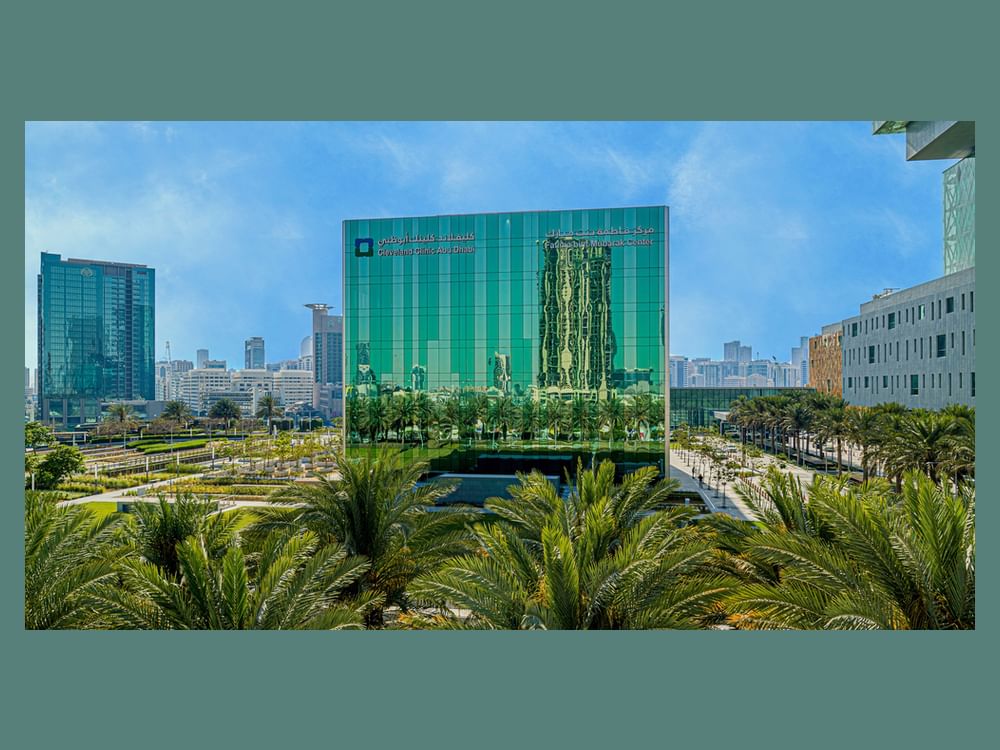
ABU DHABI, 9th November, 2026 (WAM) -- Cleveland Clinic Abu Dhabi successfully managed an exceptionally challenging ophthalmic case involving severe childhood glaucoma, Stickler syndrome, retinal weakness, and extreme pathologic myopia of -40.00 diopters. The multi-stage surgical journey reflects Cleveland Clinic Abu Dhabi’s expertise in managing highly complex eye disease and its role as a referral center for advanced ophthalmic care in the region.
The 21-year-old patient, Daud, had lived with poor vision throughout his life. His childhood glaucoma remained severe and refractory despite several prior operations in both eyes, while his extreme degree of nearsightedness, required him to depend on exceptionally thick glasses. His retinal condition and the ocular features associated with Stickler syndrome added further complexity and risk. As he grew older and entered university, his visual limitations affected his self-confidence, his social interactions, and the types of sports and activities in which he could participate.
Before coming under the care of Cleveland Clinic Abu Dhabi, Daud and his family had sought opinions from several surgeons locally and at leading institutions in the United Kingdom and Canada. They repeatedly heard how difficult and high-risk further intervention would be, yet they still had no clear plan for what should come next.
Daud’s journey with Dr. Mohamed Sayed, Staff Physician, Ophthalmology, Integrated Surgical Institute at Cleveland Clinic Abu Dhabi, began in 2021. After a thorough evaluation, Dr. Sayed held a long and difficult discussion with Daud and his mother. He explained that the safest way forward would be a staged approach: first to control the elevated eye pressure and protect the vision that remained, and later, when circumstances allowed, to address the severe refractive problem. Every available option carried significant risk.
Over the following years, Dr. Sayed performed several complex glaucoma procedures on both eyes to bring Daud’s intraocular pressure under control. Along the course of that journey, and in the setting of his long-standing eye disease, multiple prior operations, and prolonged use of topical medications, Daud developed cataracts in both eyes. The cataracts drove his already limited vision further down and eventually made another major intervention unavoidable.
Cataract surgery in Daud’s case was challenging because of his extreme myopia, elongated and altered ocular anatomy, retinal vulnerability, and history of multiple glaucoma operations. After detailed planning and careful assessment of each step, cataract surgery was performed successfully in the first eye and subsequently in the second eye.
Dr. Sayed said, “Daud’s case was exceptionally complex, involving severe childhood glaucoma, retinal weakness, Stickler syndrome, and an extreme degree of pathologic myopia, among the highest I have ever encountered. It is a profound responsibility and privilege to be entrusted with a patient’s most precious sense, his vision. Our journey required years of staged surgeries, difficult decisions, and careful management. What stayed with me most was his first visit after cataract surgery in the first eye. For the first time, he could see the vision chart without his extremely thick glasses.”
Following surgery on the first eye, Daud experienced a level of visual clarity he had never known. After surgery on the second eye, the transformation became even more apparent. He was able to wear normal-looking glasses, and the change in his confidence was immediately visible. His improved vision gave him greater independence in daily life, greater ease in social settings, and more freedom to participate in physical and lifestyle activities.
Daud’s mother said, “For years, we were told how difficult and high-risk Daud’s condition was, and there never seemed to be a clear path. At Cleveland Clinic Abu Dhabi, we were given confidence, support, and a long-term plan. The moment Daud could see his own reflection without thick glasses for the first time was unforgettable for our family. We had waited 21 years for that moment to come. It felt like a new life.”
Dr. Sayed continues to look forward to Daud’s visit to the clinic. Daud takes a photograph with him almost every time he comes, and his mother often sends collages showing the timeline of their journey together. One gesture touched Dr. Sayed most deeply; on Daud’s birthday, the photograph his mother chose to celebrate her son across her social media accounts was a photograph of Daud with him. The choice felt deeply symbolic. The change after both eyes had been operated on was so profound that, for the family, it carried the meaning of being born again.
This case highlights the importance of individualised, expert-led care in managing exceptionally complex ophthalmic diseases. It demonstrates how careful planning, advanced surgical expertise, persistence, trust between a patient and physician, and compassionate long-term care can change the course of a young person’s life.