
SHARJAH, 9th November, 2026 (WAM) -- The Khalid Bin Sultan Al Qasimi Humanitarian Foundation (KSQF), in partnership with ECPAT International, has launched the first Arabic edition of the Terminology Guidelines for the Protection of Children from Sexual Exploitation and Sexual Abuse.
The publication provides practical guidance on terminology that should be avoided, expressions that require caution and recommended alternatives, aiming to improve how child sexual exploitation and sexual abuse are described and addressed while protecting children from stigma and language that may imply they bear responsibility for the abuse they have experienced.
Unveiled at the Sharjah International Book Fair (SIBF), the 185-page publication provides institutions and child protection professionals with a specialised reference spanning 17 thematic sections. These cover different forms of child sexual exploitation and sexual abuse, including technology-facilitated offences, trafficking in children, child marriage and harmful practices, alongside terminology used to describe victims, survivors and perpetrators. The full Arabic edition is available to download from the KSQF website at https://ksqf.ae/arabic-terminology-guidelines.
One of the publication's key features is a three-colour classification system that guides professionals on the appropriate use of terminology. Green identifies terms that are generally accepted and can be used without stigmatising or harming children; orange highlights expressions that require caution and careful consideration of their context; and red identifies terms whose use should be restricted or avoided.
A dedicated annex provides specific recommendations on expressions that should be avoided and the alternatives that can be used in their place. Among these is the term "child prostitution", which the guidelines recommend replacing with "exploitation of children in/for prostitution". Similarly, the term "child pornography" should be replaced with "child sexual abuse material" or "child sexual exploitation material".
The guidelines also recommend using "sexual exploitation of children in (the context of) travel and tourism" instead of "child sex tourism", shifting the focus towards the nature of the offence and the harm inflicted on children, rather than language that may minimise the seriousness of the abuse or suggest that it is an acceptable activity.
These recommendations are particularly relevant to journalism, legal practice, public policy and child protection case management. The language used to describe abuse can influence how incidents are understood, documented and communicated, as well as how children who have experienced exploitation or abuse are perceived.
The guidelines respond to developments in technology-facilitated child sexual exploitation and sexual abuse, with dedicated sections addressing digitally generated child sexual abuse material, including material created using artificial intelligence, livestreamed child sexual abuse, the grooming and solicitation of children for sexual purposes, and online sexual extortion.
The publication examines the challenges posed by digitally generated material, including the difficulty of distinguishing authentic images from those created using artificial intelligence and the resulting complexities in identifying victims and understanding the nature of offences.
It also provides guidance on appropriate terminology for describing these practices, supporting child protection professionals, policymakers and journalists in communicating about emerging forms of exploitation and abuse with greater precision.
The Arabic edition is the result of nine months of collaboration involving more than 20 regional and international experts and specialists. It has received 19 endorsements from institutions and individual experts.
The development process went beyond translating international terminology, involving a detailed review of the meanings, implications and applications of different expressions to ensure their relevance to legal, cultural and professional contexts across the Arab region.
The Arabic adaptation also includes specific guidance on concepts particularly relevant to regional contexts, including the term "hatk al-'ird", commonly used in certain Arabic legal contexts to refer to sexual assault or violations of sexual integrity, and violence committed in the name of so-called honour. This approach seeks to support more accurate and child-sensitive language when addressing these issues.
The diversity of legal, cultural and professional expertise involved in developing the publication has helped establish a reference that recognises differences between legal systems and professional practices across Arabic-speaking countries, while remaining consistent with international child rights and protection standards.
The initiative builds on the efforts of KSQF, under the leadership of Her Highness Sheikha Jawaher bint Mohammed Al Qasimi, Wife of His Highness the Ruler of Sharjah and Chairperson of KSQF, to advance children's rights and protection through regional and international partnerships, knowledge development and initiatives that strengthen child protection systems.
Lujan Mourad, Director of the Khalid Bin Sultan Al Qasimi Humanitarian Foundation, said, "The words we use when discussing child sexual exploitation and sexual abuse influence how we understand children's experiences, respond to their cases and uphold their rights and dignity. Our partnership with ECPAT International began with the aim of developing an Arabic reference that helps institutions and specialists use clear, accurate terminology. Over nine months, experts from different Arab countries examined meanings, reviewed wording and shared their experience to create a practical resource that serves children and everyone working to protect them."
She added: "The success of this work begins with its use in practice. We want the guidelines to become a reference for child protection professionals handling cases, journalists preparing reports, researchers and educators addressing these issues, and decision-makers developing policies. We will continue working with our partners to help this resource reach more institutions and specialists, so that it becomes a tool they can use to protect children."
Guillaume Landry, Executive Director of ECPAT International, said: "Words matter. They can reassure and recognise a child's experience, but they can also blame a child or implicitly place responsibility on them for what they have been subjected to. The guidelines provide context to help policymakers, practitioners, service providers, parents, communities and the media make informed decisions about the terminology they use. We are proud to see the first adaptation of the second edition released in Arabic, through our partnership with KSQF and the experts and organisations who have worked together across the region."
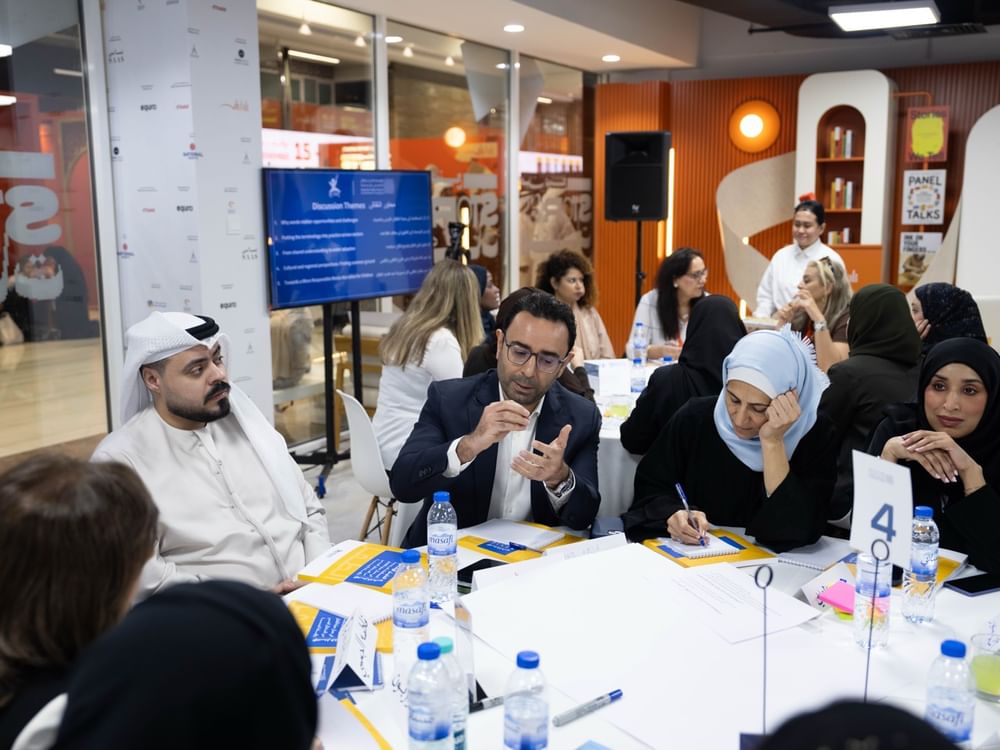
To encourage the practical adoption of the guidelines, KSQF and ECPAT International organised an interactive dialogue titled "Arabic Terminology to Protect Children: From Unifying Language to Unifying Efforts", as part of the Foundation's participation at SIBF. The session brought together child protection specialists, policymakers, educators, researchers and media professionals.
Discussions explored how institutions can integrate the recommended terminology into organisational policies, professional training, case management procedures, research and media communications. Participants also considered the challenges institutions may face in adopting consistent professional language and opportunities to expand the use of the guidelines across the region.
Participants were invited to identify practical steps they could undertake over the following six months, including reviewing terminology in institutional publications and materials, incorporating the guidelines into professional training programmes and sharing the reference with relevant teams and organisations. These actions are intended to help translate the publication's recommendations into professional practices that support more accurate communication and more effective responses to child sexual exploitation and sexual abuse.
Throughout the Sharjah International Book Fair, KSQF is showcasing the Arabic edition at its dedicated stand, introducing visitors and child protection professionals to its content and encouraging relevant institutions to use its recommendations as a reference in their professional practices.