
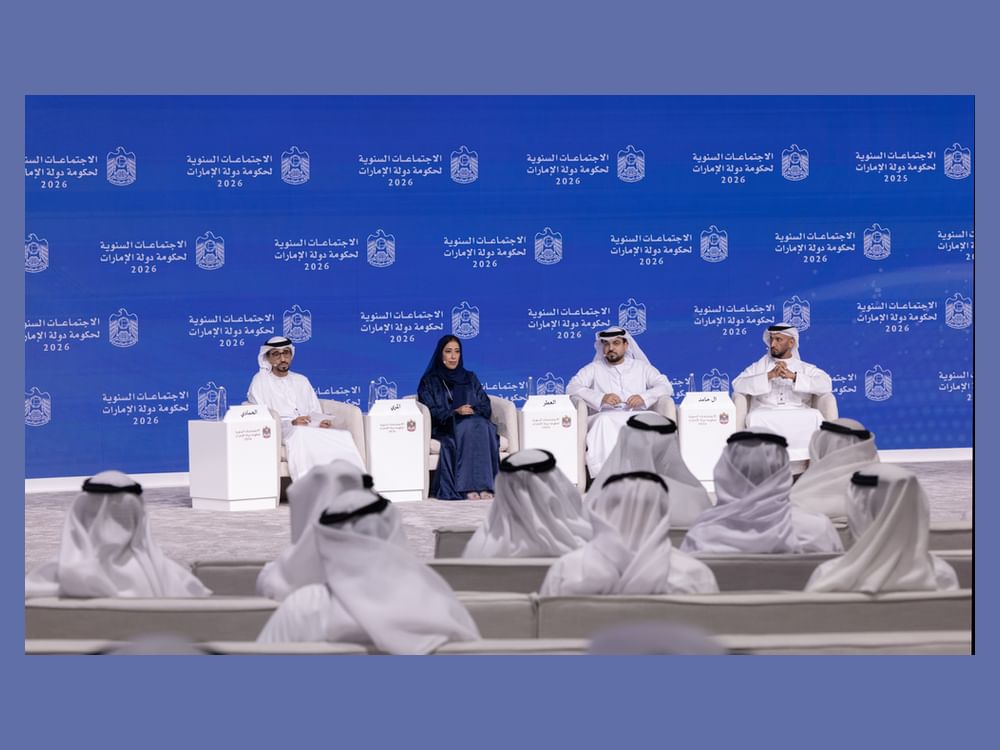
ABU DHABI, 10th November, 2026 (WAM) -- A discussion held as part of the UAE Government Annual Meetings 2026 on how the UAE communicates its achievements and national narrative to global audiences affirmed that the UAE builds its story on facts and accomplishments on the ground, supported by a strong foundation of trust and accurate information.
The discussion highlighted the high level of trust enjoyed by UAE media, supported by rapid access to information from primary sources, verification of its accuracy, and integrated messaging between local and federal entities. This helps present a clear and balanced picture of the UAE's achievements and developments to audiences within the country and abroad.
The discussion featured Abdulla bin Mohammed bin Butti Al Hamed, Chairman of the National Media Authority (NMA); Saeed Al Eter, Chairman of the UAE Government Media Office; and Mona Ghanem Al Marri, Vice Chairperson and Managing Director of the Dubai Media Council and Director-General of the Government of Dubai Media Office.
Participants stressed the importance of direct coordination between teams on the ground and newsrooms, strengthening professional relationships with Arab and international media organisations, and using digital platforms, artificial intelligence and social media to deliver reliable information and reinforce the UAE narrative across the media landscape.
Al Hamed said the National Media Authority is working to establish a comprehensive national media ecosystem in which local and federal institutions and media organisations operating in the UAE complement one another.
He said this approach is guided by a vision that strengthens the UAE's presence in the international media landscape and enhances its ability to communicate its message to the world professionally and credibly by coordinating media efforts and strengthening the sector's readiness to address different developments and challenges.
These efforts, he added, contribute to reinforcing international confidence and enhancing the UAE's reputation and positive image globally.
Al Hamed explained that rapid access to information from authorised sources and clear communication channels between relevant entities and media organisations are fundamental to effective media performance.
They enable developments to be documented on the ground, information to be verified and placed in its proper context, and news to reach the public more quickly, improving the accuracy of media coverage, ensuring consistency in official messaging and reducing opportunities for rumours and misleading interpretations to spread.
He stressed the importance of using artificial intelligence to strengthen monitoring, analysis and verification capabilities and to anticipate rumours and misinformation, while preserving editorial judgement and human awareness in communicating messages.
Al Hamed said the UAE's story is told by an entire nation: by its leadership through its vision and ambition; its institutions through their achievements; its economy through its growth and competitiveness; and its society through its distinctive model of coexistence and human solidarity.
He added that the strength of UAE media lies in its ability to communicate this experience to the world through facts, figures and human stories, while monitoring what is published, verifying information and presenting it accurately and at the appropriate time.
He also highlighted the role of citizens and residents in reinforcing national and Gulf cohesion by connecting accurate information with people's experiences and demonstrating how achievements affect their lives, giving the UAE narrative a human dimension that strengthens its reach and impact among audiences worldwide.
For his part, Al Eter affirmed the commitment of government entities to providing accurate information at the right time, noting that building a trusted UAE narrative requires presenting news in its proper context and explaining its background and significance to audiences.
He stressed the importance of expanding cooperation with media platforms and organisations in different countries to communicate the UAE narrative in multiple languages through advanced digital content tailored to the interests of audiences in each market, while preserving accuracy and clarity.
Al Eter said one of the responsibilities of national media is to communicate the UAE's narrative and achievements alongside the progress of government work.
When a facility opens or a project is launched, he explained, the media's role should not be limited to reporting the event, but should also explain why the project was needed, the efforts that contributed to its completion and its impact on people's lives.
Through these details, he said, a national narrative grounded in facts takes shape, enabling audiences inside and outside the country to understand the UAE's experience and the stages of its development.
He added that strengthening the UAE's presence in international media coverage requires monitoring what is published about the country, understanding audiences' interests and questions, and providing answers based on reliable information and authoritative sources.
Al Eter said proactively taking stories from the field and providing their details to journalists around the world helps broaden the reach of the UAE's voice and gives media organisations accurate material through which to understand and present the country's experience.
Al Marri said the professional relationships UAE institutions have built with Arab and international newsrooms over many years represent an important asset in supporting the country's media presence.
She noted that direct and continuous communication with editors enables them to return to relevant sources for clarification and update published information to ensure its accuracy.
Al Marri explained that audiences follow government work through media coverage, while the story itself begins on the ground, where ministries and institutions implement initiatives and decisions and monitor their impact on people's lives.
She said the success of UAE media in fulfilling its role is closely linked to the leadership's approach, which combines swift decision-making with clear direction on keeping society transparently informed of developments.
This enables media organisations to obtain information directly from its sources, explain measures being taken and highlight their positive impact on the lives of community members.
Al Marri added that the use of digital technologies and artificial intelligence in media opens new possibilities for developing content creation methods and reaching audiences.
She stressed the importance of keeping pace with these transformations while maintaining professionalism and accuracy and strengthening cooperation between media organisations and content creators to deliver clear, coherent messages that reflect the UAE's image and achievements.