
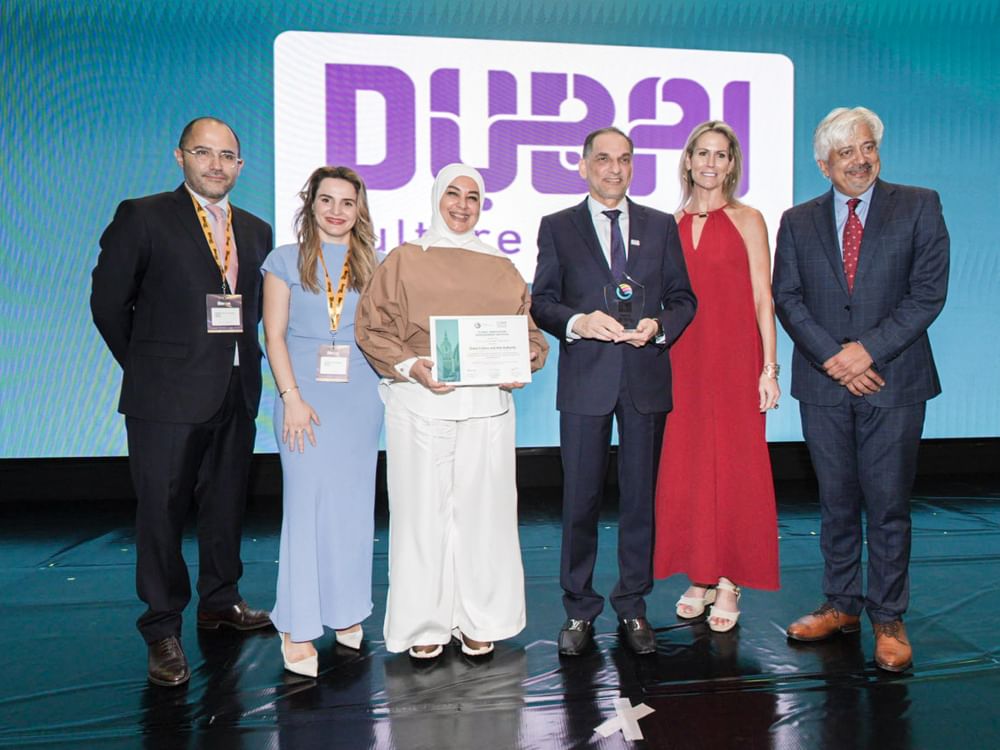
DUBAI, 11th November, 2026 (WAM) -- Dubai Culture and Arts Authority (Dubai Culture) has ranked among the top three globally in the "Most Innovative Project – Public Sector" category at the Global Innovation Management Institute (GIMI) Awards, which attracted more than 200 projects worldwide.
The recognition honours the Authority's development and implementation of a Predictive Heritage Protection Framework that safeguarded Al Fahidi Fort and its historic fabric throughout its rehabilitation.
The achievement reflects Dubai Culture's commitment to integrating innovation, advanced technologies and specialist expertise into heritage protection, while preserving the emirate's cultural legacy for future generations.
The recognition comes ahead of Al Fahidi Fort's reopening, highlighting Dubai Culture's success in preserving the landmark's historic character while preparing it to welcome new generations of visitors.
During the rehabilitation, Dubai Culture adopted an integrated methodology combining engineering expertise, advanced monitoring technologies and heritage conservation practices to anticipate potential risks and enable timely, evidence-based interventions.
Dating back to around 1787, Al Fahidi Fort is Dubai's oldest standing building and one of its most significant heritage landmarks. Its rehabilitation presented complex engineering challenges, particularly protecting the southwest tower while excavation works exceeding 16 metres in depth took place just metres away.
To safeguard the structure, Dubai Culture deployed high-precision sensors and monitoring systems to track structural movement, vibrations and cracks. The resulting data informed engineering decisions, enabling timely interventions that prevented structural failure, heritage loss and irreversible damage.
The project has also established a framework that can be adapted to protect other heritage assets under Dubai Culture's Museums and Heritage Sector. Combining early risk assessment, continuous monitoring and coordinated intervention, the methodology offers opportunities to strengthen long-term conservation practices across historic buildings, archaeological sites and other culturally significant landmarks.
Dubai Culture developed the framework in collaboration with international heritage experts and specialists in conservation, structural engineering and advanced monitoring technologies, integrating their expertise into a unified approach to protecting the Fort.
Hala Badri, Director-General of Dubai Culture and Arts Authority, said the recognition reflects the Authority's commitment to embedding innovation across its cultural and heritage projects, strengthening institutional capabilities and developing sustainable solutions for managing cultural assets.
"This recognition represents a valuable addition to Dubai Culture's record of achievements and reflects our ability to develop impactful solutions that advance institutional practices, enhance the management of cultural and heritage assets, and support their long-term sustainability," she said.
Badri emphasised the importance of investing in knowledge, developing capabilities and strengthening collaboration with international experts and partners to support Dubai's position as a global cultural hub that combines authentic heritage with future ambitions.
She added that the framework's potential extends beyond Al Fahidi Fort, providing a foundation for exploring innovative approaches to protecting other heritage assets while addressing the specific requirements of each historic site.
As part of its participation in GIMI activities in Colombia, Dubai Culture's delegation visited Ecopetrol's Cartagena Refinery to explore innovative technologies aimed at reducing the environmental impact of energy production.
The visit included a demonstration of a hydrogen-blend prototype that achieved a 40 percent reduction in greenhouse gas emissions under test conditions while maintaining thermal efficiency, according to results presented during the visit.
The delegation also attended a two-hour workshop at Taller ECONOVA, exploring startup investment, corporate venture capital and collaboration with emerging businesses. Discussions covered pilot projects, venture client models and the use of artificial intelligence to identify and assess investment opportunities across international markets.
These activities reinforced the importance of practical experimentation, evidence-based decision-making and collaboration in advancing innovation and strengthening institutional capabilities.
GIMI is a global non-profit organisation operating in more than 60 countries, promoting innovation management practices and helping organisations strengthen their capabilities and performance.