
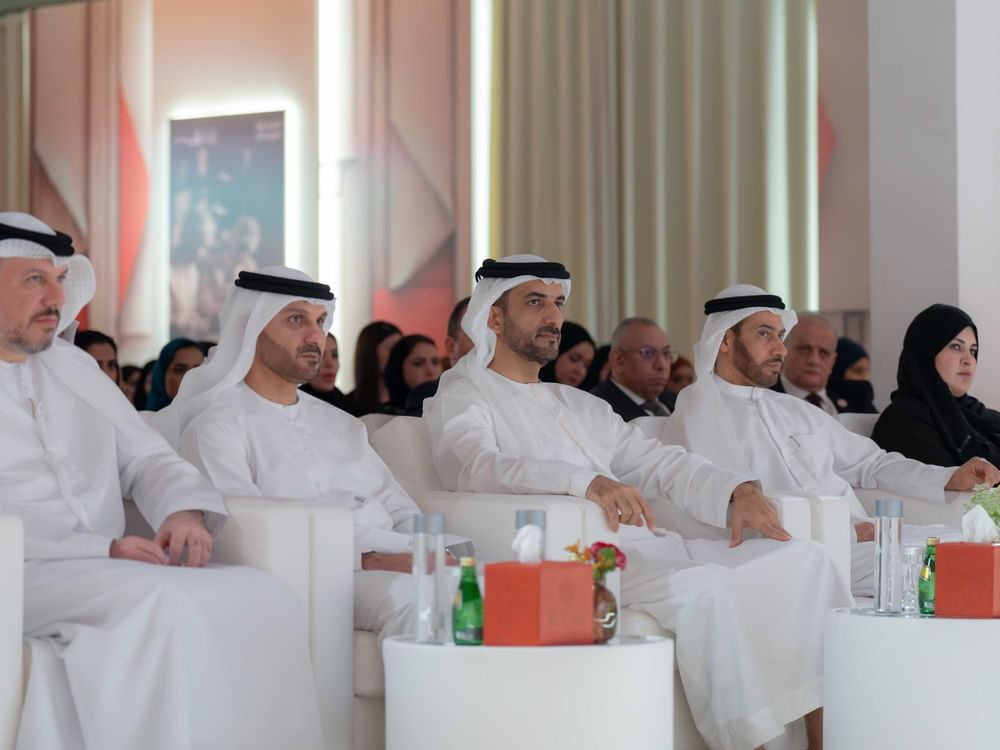
SHARJAH, 11th November, 2026 (WAM) -- H.H. Sheikh Dr. Sultan bin Ahmed bin Sultan Al Qasimi, Deputy Ruler of Sharjah and Chairman of the Sharjah Judicial Council, attended a panel discussion on Wednesday evening titled "Alternative Dispute Resolution: An International Perspective".
Organised by the Judicial Department, the session took place at Expo Centre Sharjah as part of the cultural events accompanying the Sharjah International Book Fair 2026.
H.H. Sheikh Dr. Sultan bin Ahmed emphasised that developing the justice system is fundamental to building stable and prosperous societies, highlighting the importance of keeping pace with global developments by adopting comprehensive dispute resolution models beyond traditional litigation.
He noted that flexible alternatives enable parties to reach consensual solutions that safeguard rights, accelerate dispute resolution and reduce the burden on courts, thereby enhancing judicial efficiency and improving services.
He also stressed the importance of drawing on leading international experiences and exchanging expertise to develop legislation and judicial practices in line with economic and social changes, while strengthening the UAE's and Sharjah's standing in this field.
He further called for developing specialised national talent and strengthening cooperation among judicial, legislative and societal institutions to establish a sustainable justice system based on international best practices.
The discussion featured Judge Ali Shamis Al Madhani, Deputy Chief Justice of the DIFC Courts; Dr Bana Yousuf Buzaboon, psychological expert at the Sharjah Child Safety Department; and Dr Imad El-Din Hussein, consultant at the Singapore International Dispute Resolution Academy (SIDRA).
Al Madhani discussed the evolution of justice systems towards diverse dispute resolution mechanisms that address conflicts before reaching the courts. He noted that arbitration has developed into a recognised parallel pathway to traditional litigation, with growing caseloads at UAE arbitration centres reflecting increasing public confidence.
He emphasised the need for strong legal and institutional frameworks that ensure the reliability of arbitration outcomes while providing resolution options suited to the needs of disputing parties.
Al Madhani stressed that reconciliation and dispute resolution are shared institutional responsibilities rather than matters confined to courts and judicial authorities. He called for greater involvement by state institutions in addressing disputes early to reduce court caseloads.
He also highlighted the importance of establishing clear performance indicators, effectively managing data on case volumes, types and resolution rates, and investing in specialised training to equip personnel with practical dispute management skills.
He added that resolution mechanisms should reflect the complexity and scale of cases, ensuring appropriate resources are allocated to small, medium and large disputes to improve judicial efficiency and service quality.
Dr Bana Yousuf Buzaboon addressed the role of alternative dispute resolution in managing family conflicts, particularly those involving children. She emphasised that successful outcomes should be measured not merely by ending disputes but by preserving family stability, maintaining relationships and minimising psychological and social harm to children.
She highlighted individualised family interventions designed to reshape thought patterns, improve communication and help disputing parties understand one another's needs and perspectives. Such approaches can bridge emotional differences and support lasting reconciliation.
Buzaboon stressed the importance of employing qualified specialists capable of managing sensitive family disputes through flexible approaches that respect social and cultural considerations. She called for adapting international practices to Gulf customs and traditions while recognising the region's cultural diversity and multicultural population.
She also highlighted Sharjah's efforts to strengthen coordination among relevant institutions, develop specialised personnel and improve judicial medical reports through targeted training, providing judges with accurate information to support decisions and accelerate case resolution.
Dr Imad El-Din Hussein emphasised the importance of an integrated legislative and judicial framework that strengthens cooperation among legislative authorities, courts and dispute resolution centres, enabling justice systems to respond to global developments.
Drawing on Singapore's experience, he explained that international competitiveness depends on offering diverse dispute resolution options rather than relying solely on judicial efficiency. Such systems must balance timely settlements with the protection of rights and economic interests, particularly in commercial and investment disputes.
Hussein highlighted mediation as an effective means of reaching consensual settlements while avoiding lengthy litigation. He noted that increasing pressure on courts requires wider adoption of alternative dispute resolution (ADR) mechanisms, including approaches combining the roles of judges, mediators and conciliators.
He cited Italy's model, which makes mediation mandatory for certain disputes, encouraging parties to explore constructive solutions before pursuing litigation.
He also called for developing indicators to assess dispute resolution efficiency and its impact on economic competitiveness and investment attractiveness, alongside strengthening arbitration and investment dispute resolution centres.
At the conclusion of the session, H.H. Sheikh Dr. Sultan bin Ahmed bin Sultan Al Qasimi listened to Hind bint Kalban, a visually impaired student at the University of Sharjah, who presented an initiative to make the Personal Status Law available in Braille.
The initiative aims to improve access to legal knowledge for people with disabilities by providing legislative references in accessible formats, supporting their academic development and expanding opportunities for participation in the legal and judicial fields. It also reflects a commitment to equal opportunities and access to knowledge.