
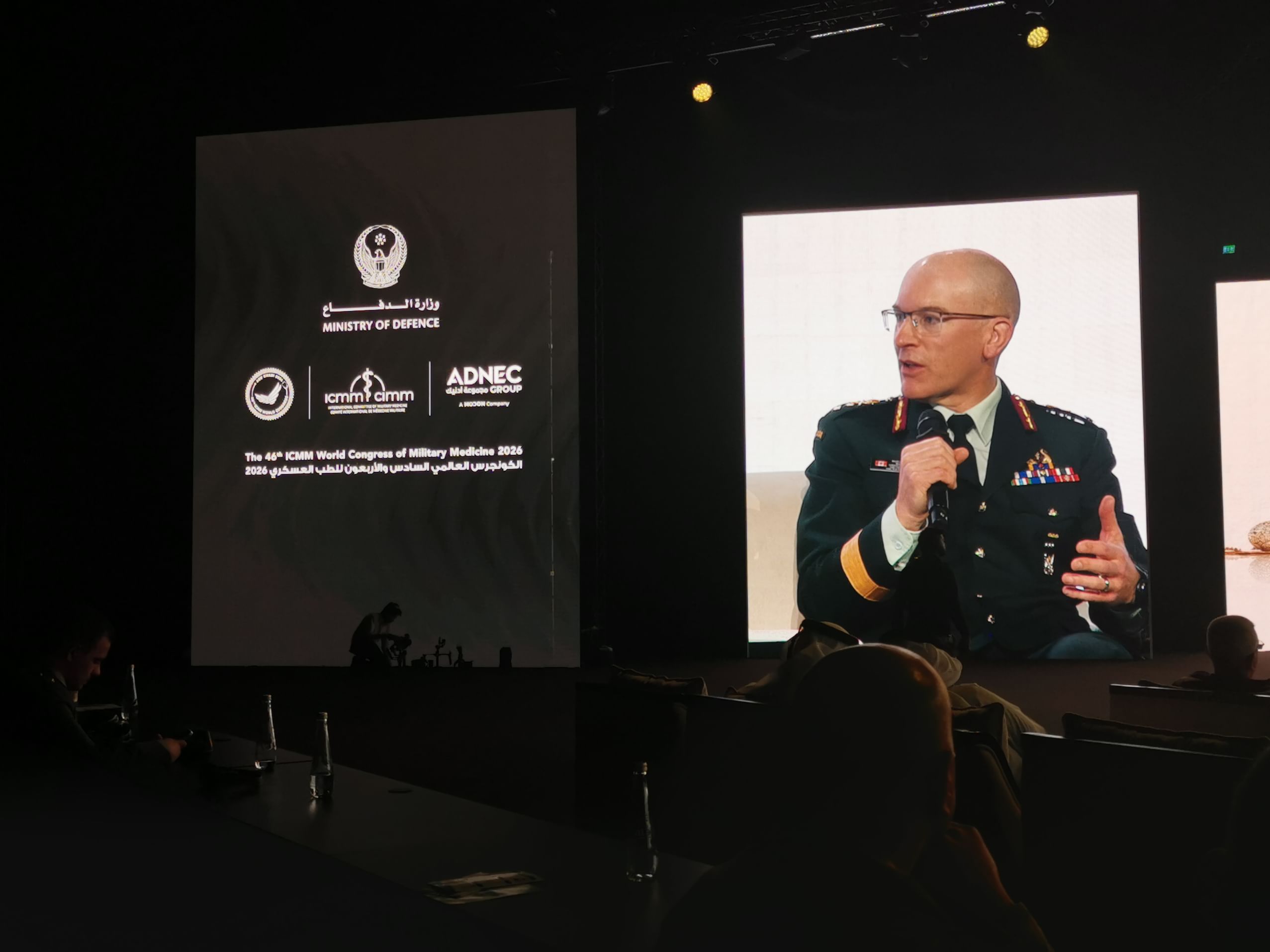
ABU DHABI, 12th November, 2026 (WAM) -- Major General Dr. Scott Malcolm, Surgeon General of the Canadian Armed Forces, highlighted the importance of drawing on military expertise in advance planning and emergency preparedness, as well as strengthening cooperation with the civilian healthcare sector through stakeholder engagement, knowledge exchange and the development of sustainable professional relationships between institutions.
Speaking during a panel discussion titled “Enhancing Civil-Military Cooperation and Integration in Healthcare and Health Security” at the 46th World Congress on Military Medicine, he said military institutions have extensive experience in planning for and responding to unforeseen circumstances and emergencies.
He stressed the importance of listening to all partners and involving communities and relevant stakeholders in the planning process, while encouraging institutions to exchange perspectives and expertise to strengthen preparedness for future events, including fires, floods and pandemics.
He added that advance preparedness enhances the ability of individuals and healthcare systems to respond to crises and mitigate their impact on healthcare services and communities. Building professional relationships and maintaining ongoing institutional cooperation outside periods of crisis, he noted, are fundamental pillars of an effective preparedness framework.
Addressing the mobility of medical professionals across borders, he explained that facilitating the deployment of healthcare expertise between countries requires clear mechanisms for recognising professional licences and qualifications.
He noted that his position as Surgeon General of the Canadian Armed Forces enables him to communicate directly with counterparts and heads of military medical services in other countries to verify that their doctors and surgeons are duly licensed and accredited in their home countries and maintain good professional standing.
He explained that obtaining official confirmation of a medical professional's licensing and accreditation allows for the issuance of a formal letter verifying their qualifications and professional credentials, helping facilitate cross-border deployment. This would be followed by an assessment of the practitioner's practical competence to ensure they can perform the required duties upon arrival at their assigned workplace.
Developing such procedures, he added, would help streamline cooperation and facilitate the deployment of medical teams in future joint operations.
He further emphasised that physicians provide a practical starting point for expanding international healthcare cooperation, given the common foundations shared by medical training and qualification programmes across countries.
Referring to a recent meeting with several colleagues in the UAE who had received their medical training in Canada, he noted the considerable similarities in their educational and professional preparation.
He pointed to the potential to extend this approach in the future to include other healthcare professions, strengthening interoperability and international healthcare cooperation while enabling countries to support one another when needed and make effective use of available medical expertise and capabilities.