
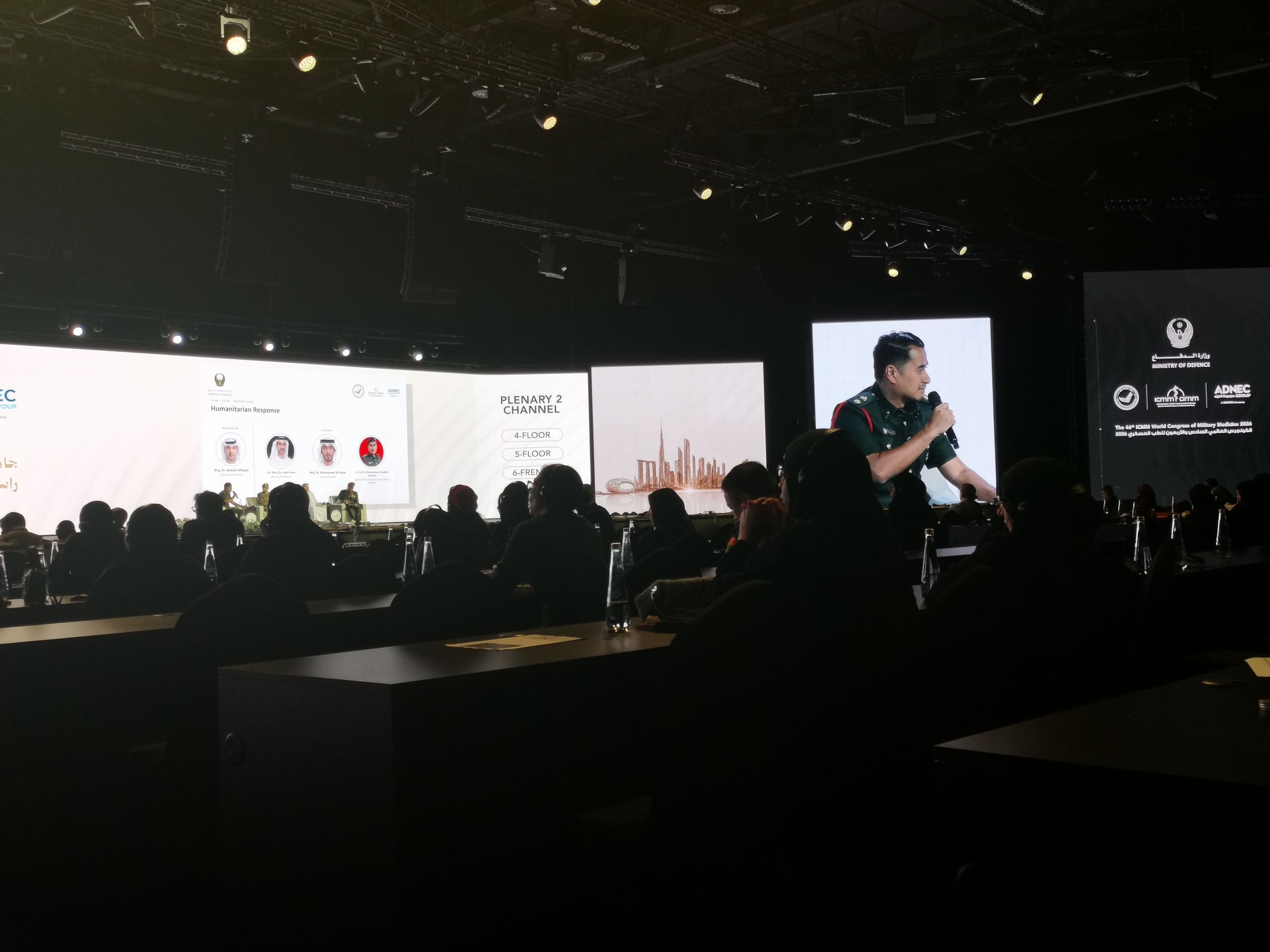
ABU DHABI, 12th November, 2026 (WAM) -- Lieutenant Colonel Dr. Mohamed Ezzeldin Hamzan, Consultant in Plastic and Reconstructive Surgery at Tuanku Mizan Armed Forces Hospital in Malaysia, showcased a range of innovative medical solutions developed by military surgical teams to manage critical injuries, open wounds and burns during humanitarian relief operations in disaster-affected areas. The innovations enable surgical care to be delivered effectively in challenging field conditions, where space is limited and conventional medical equipment may not be readily available.
Speaking during a panel discussion titled “Humanitarian Response” at the 46th World Congress on Military Medicine, Hamzan explained that deploying medical teams in disaster zones presents significant logistical challenges, particularly the difficulty of transporting bulky medical equipment and costly supplies. These constraints, he said, have prompted surgical teams to develop practical, lightweight alternatives that maintain the effectiveness of medical interventions while ensuring patient safety.
In this regard, he presented a manual negative pressure wound therapy system (Manual NPWT) as an alternative to expensive, multi-component electric devices. He explained that the system had demonstrated effectiveness in promoting healthy granulation tissue formation and removing wound exudate and fluids from open wounds, thereby supporting and accelerating the healing process.
He also highlighted the use of a manual dermatome as an alternative to conventional bulky equipment used for harvesting skin grafts. Given the limited space available to field surgical teams, lightweight and easy-to-use manual instruments, including the Chevalier/Sauer dermatome, were employed, enabling successful skin grafting procedures without compromising patient safety.
Hamzan further noted that the team had established a Mini Skin Bank in preparation for the potential arrival of large numbers of burn victims. The initiative was implemented one week before deployment and involved preserving donated human skin grafts (allografts) in a glycerol solution to ensure they were ready for immediate use in emergencies.
On enhancing the operational readiness of field medical teams, he stressed the importance of regular exercises and medical deployment drills at military hospitals, alongside the exchange of information and expertise with the medical services of allied armed forces.
He emphasised that medical innovation is not the result of individual efforts alone, but rather depends on collective brainstorming and teamwork. He also highlighted the importance of medical personnel maintaining an open and humble approach when engaging directly with local communities to understand their needs and develop rapid, appropriate solutions.
He also underscored the role of telemedicine and satellite internet connectivity in supporting field medical operations. Cooperation with local authorities to secure internet access enabled medical teams to communicate directly with consultants and medical commanders at their headquarters and obtain immediate clinical guidance when managing complex cases.
He stressed that the success of humanitarian medical missions depends on close cooperation with local authorities and communities. In this regard, he commended the support provided by local authorities and hospital administrations in affected areas, as well as the voluntary assistance of local young people and students who provided interpretation services and facilitated communication with patients free of charge.
He added that providing care to people affected by humanitarian crises requires an open and adaptable approach to field conditions and patients' needs, while maintaining scientific rigour and placing patient safety and the quality of surgical outcomes at the forefront of all interventions as non-negotiable priorities.
Hamzan also outlined key lessons learned to strengthen the preparedness of future medical missions, foremost among them the importance of early planning and analysing data on disaster-affected areas and anticipated injury patterns well before the arrival of aircraft and medical teams. This, he said, enables appropriate interventions to be planned and early response measures to be put in place.
He further highlighted the need to strengthen medical staffing, particularly in Central Sterile Supply Departments (CSSD), and provide a wider range of versatile surgical instruments beyond the standard equipment carried by small field medical teams.
He also stressed the importance of conducting brainstorming sessions and preliminary assessments of innovative solutions, while seeking guidance from senior commanders and experienced consultants before introducing such solutions more widely and adopting them in field operations.