
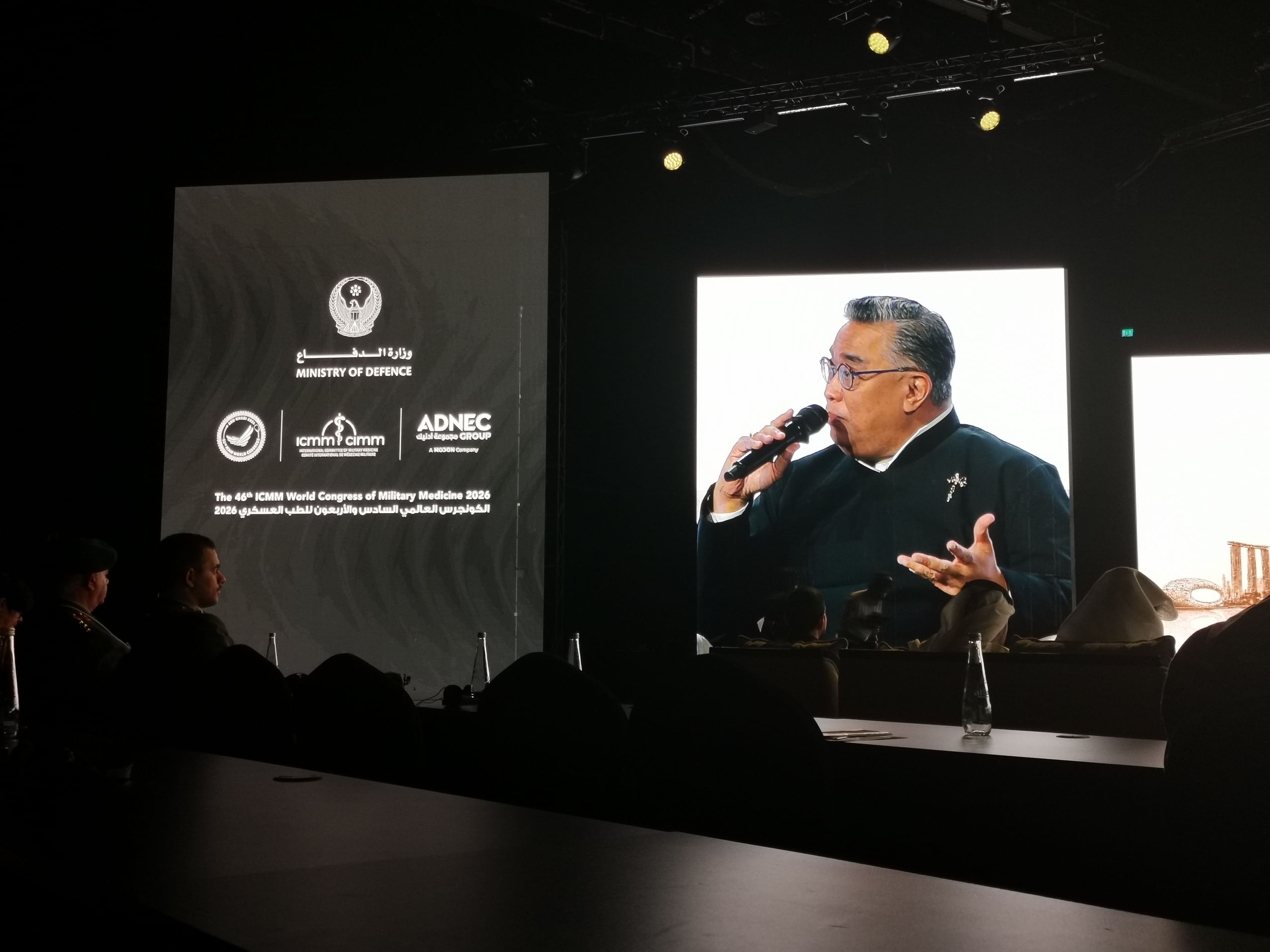
ABU DHABI,12th November, 2026 (WAM) -- Ludy Suryantoro, Head of Multi-sectoral Engagement for Health Security at the World Health Organisation (WHO), stressed the importance of strengthening cooperation among civilian and military sectors, government entities, non-governmental organisations and the private sector to advance global health security and enhance countries' preparedness for emergencies.
He noted that institutional partnerships and advance preparedness are fundamental to ensuring the continuity of healthcare services and an effective response to crises.
Speaking during a panel discussion titled “A Unified Response: Connecting Military and Civilian Health Systems” at the 46th World Congress on Military Medicine in Abu Dhabi, Suryantoro said health issues extend beyond the healthcare sector, encompassing social, economic and political dimensions at national, regional and international levels. This, he explained, requires coordinated contributions from all relevant sectors.
He explained that the International Health Regulations (IHR) provide a framework for preventing and responding to public health risks. Their implementation, however, requires consideration of differences in institutional cultures and organisational structures, as well as stronger coordination among relevant authorities.
He noted that civil-military cooperation models vary from one country to another and may involve law enforcement agencies, firefighting services, national guards and ministries of interior, depending on each country's institutional structure.
Suryantoro said the WHO is working to develop frameworks for preparedness and multisectoral coordination, explaining that the designation of the lead authority for emergency response should be based on shared responsibility and a balanced approach among relevant stakeholders, while taking into account differences in risk assessments, priorities and decision-making processes.
He noted that the COVID-19 pandemic highlighted the importance of the International Health Regulations in governing the declaration of Public Health Emergencies of International Concern (PHEICs) and assessing epidemiological risks.
He also pointed to the diversity of crisis management models, which reflect different governance systems and national priorities. In Singapore, for example, the Prime Minister's Office coordinated the response with the participation of the Ministry of Home Affairs, with a particular focus on maintaining the continuity of financial operations. Countries such as Nigeria and Indonesia, meanwhile, adopt coordination models involving various ministries and government agencies.
He stressed that effective preparedness requires clear mechanisms for escalating response measures, regular testing of systems, and assessments of workforce readiness, medical countermeasures, procurement and supply operations.
He added that the WHO has developed a national framework for civil-military cooperation that brings together security sectors and ministries of health to identify available capacities, resources, human resources and technologies, enabling countries to make more integrated use of their national capabilities.
He emphasised the importance of involving all authorities overseeing healthcare institutions, including military hospitals, police hospitals and trauma and emergency centres, as well as immigration authorities in some countries. Such engagement, he said, helps ensure interoperability and coordinated service delivery.
Strengthening international cooperation, he added, requires more effective national coordination and clearly defined institutional roles and responsibilities to ensure that efforts are integrated during emergencies.
Suryantoro explained that the WHO's national risk and capacity assessment process covers between 20 and 25 core capacities, including epidemiological surveillance, laboratory systems and preparedness for various types of hazards, including those arising at the human-animal health interface. These assessments help countries identify their needs and strengthen their preparedness capabilities.
He added that influenza preparedness, for example, may be addressed through plans developed by different sectors, making it essential to align communication channels, procedures and priorities to ensure consistency across plans and coordinated responsibilities.
He concluded that effective cooperation must be founded on shared responsibilities, foremost among them saving lives and safeguarding the security and protection of populations, while ensuring that healthcare and security resources are deployed in line with national priorities to build health systems that are better prepared and more resilient in the face of emergencies.