
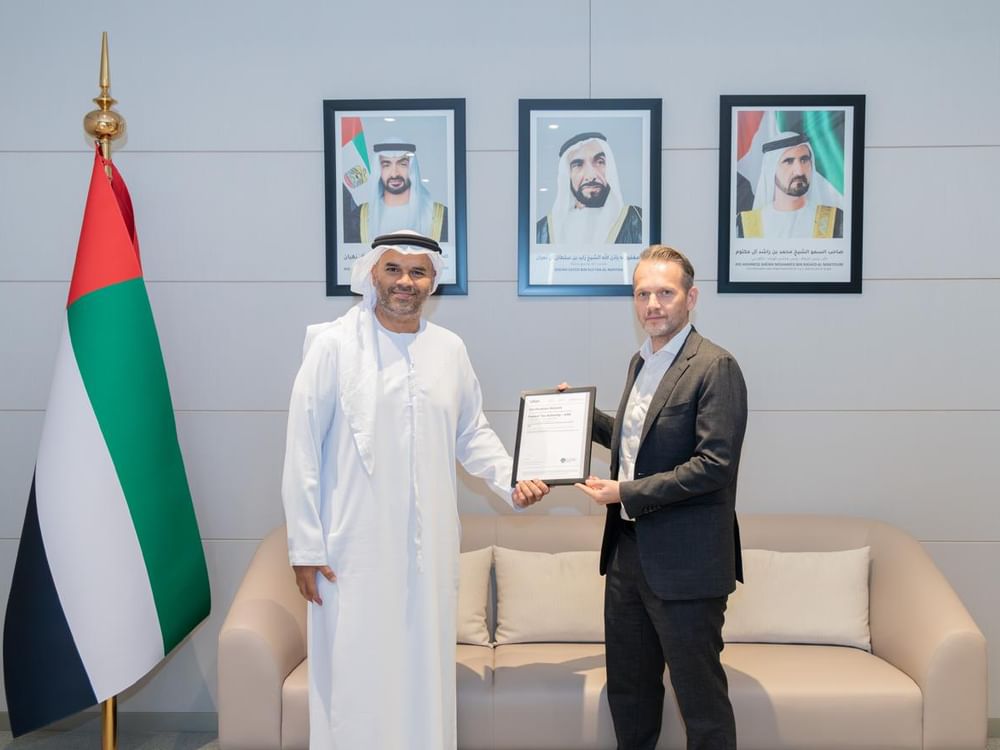
DUBAI, 15th November, 2026 (WAM) -- The Federal Tax Authority (FTA) has received the Global Certification for Institutional Readiness and Agility at the Gold–Leader level, including the Gold category for AI transformation, from the International Business Agility and Readiness Institute (TIBAI). The FTA is the first government entity in the tax sector to receive this certification.
This accreditation recognises the FTA’s resilience and agility in anticipating future developments and managing transformation. This achievement follows the FTA’s successful fulfilment, across all its sectors and departments, of the requirements of the strategic and operational frameworks, alongside advanced results against the criteria of the globally accredited model. According to TIBAI, the model is the first and only one of its kind worldwide and comprises 61 criteria and 1,500 assessment points covering future readiness, the development of dynamic capabilities, an agile organisational culture, and agile technology and AI transformation.
Abdulaziz Al Mulla, Director-General of the FTA, said, “This accreditation reflects the FTA’s efforts and commitment to adopting an integrated institutional approach that enables it to anticipate change and manage transformation efficiently, supporting institutional performance through a clear strategic vision.”
He added, “This achievement marks a significant milestone in the FTA’s institutional development. It reinforces a proactive working culture, strengthens the integration of strategic and operational frameworks, and demonstrates the FTA’s commitment to applying global best practices, in line with the UAE’s aspirations.”
Jasim Al Zarooni, Director of Strategy and Chief Innovation Officer, said, “This accreditation reflects the maturity of the FTA’s institutional framework, which it has developed to strengthen its future readiness through the integration of strategic and operational planning, risk management, and future foresight. It also reflects the FTA’s efforts to align its policies, processes, and operational systems within an integrated institutional approach.”