
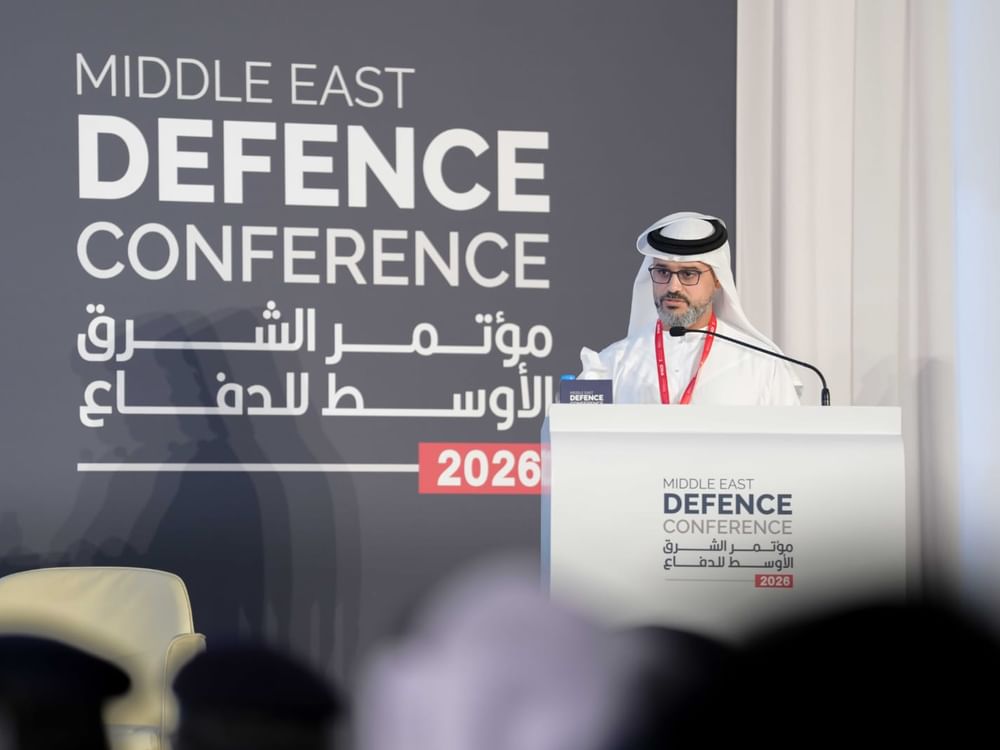
ABU DHABI, 19th November, 2026 (WAM) -- The Rabdan Security & Defence Institute (RSDI), part of Rabdan Academy, concluded the Middle East Defence Conference 2026 today at the Academy's campus in Abu Dhabi, bringing together senior military figures, international experts, defence industry executives, researchers and specialists in security and defence.
The conference featured 19 speakers and participants across a programme of three panel discussions examining lessons from recent conflicts, emerging aerial threats, national resilience and developments in defence manufacturing and supply chains, against the backdrop of the rapid expansion of unmanned systems and advanced military technologies.
The conference opened with an address by James Morse, President of Rabdan Academy, who highlighted the importance of responding to the changing nature of warfare and developing defence capabilities that can meet emerging security challenges.
Morse said, “Drones are no longer simply a supporting military capability. They are fundamentally changing how wars are fought and what national security requires. These developments demand a different approach to preparing for the future, one that goes beyond strengthening military capabilities to building national resilience and investing in knowledge, research and defence technology.”
He added, “This conference brings together military, academic and industry expertise to examine the challenges facing defence and security. The Rabdan Security & Defence Institute has an important role to play in understanding these developments, assessing their implications and turning research into practical insights and recommendations that help decision-makers strengthen defence capabilities and prepare for future challenges.”
The conference also featured a keynote address by Hamad Al Marar, Managing Director and CEO, EDGE Group, titled “Lessons on Resilience Beyond the Gulf Region”. His address explored the value of international experience in understanding evolving security and defence challenges and strengthening the ability to adapt to technological and military change.
Al Marar said, “Recent developments have shown that defence resilience is not measured by military strength alone. It also depends on how quickly nations can adapt to threats, develop new technologies and maintain production and supply under difficult circumstances. Innovation, manufacturing capability and rapid response have become essential to building defence systems capable of meeting future challenges.”
He added, “Lessons from recent conflicts underline the importance of bringing military planning, technological development and industrial capability together. The future of defence will depend on more adaptable systems, stronger partnerships and the ability to develop solutions that keep pace with changing threats.”
The first panel discussion, “Future Warfare – Drone Lessons from Conventional and Unconventional Conflict”, examined how drones are transforming military operations, their implications for combat doctrine and operational planning, and the lessons emerging from recent conflicts.
The second panel discussion, “National Resilience – Defending Against the Drone Threat”, focused on strengthening national preparedness to protect critical infrastructure and essential facilities, developing capabilities to counter evolving aerial threats, and improving coordination among military, security and civilian institutions.
The third panel discussion, “Defence Industry and Technology – Procurement, Production, and Disrupting the Supply Chain”, explored the future of defence industries amid the rapid proliferation of drones, opportunities to strengthen domestic manufacturing, production capabilities and industrial partnerships, and challenges affecting supply chains and advanced defence technologies.
The conference also marked the launch of a specialised "Bottom Line Up Front" (BLUF) report by the Rabdan Security & Defence Institute, titled “Command Decision and Target Prioritisation in the Artificial Intelligence Age”. Dr. Jack Harding, Interim Manager of the Institute, presented its key findings and strategic conclusions, examining the implications of artificial intelligence and advanced sensing technologies for military command and decision-making.
The report explored how military operations are changing as emerging technologies enable targets to be detected, information to be analysed and priorities to be established at unprecedented speed. It also examined the challenges military commanders face in processing increasing volumes of information and recommendations within increasingly compressed decision-making windows.
The report presented recommendations on adapting command procedures, establishing target priorities and decision-making authorities, integrating AI-enabled decision-support systems, and strengthening communications network resilience to maintain effective command oversight in complex operational environments.
Dr. Harding said, “The challenge in modern military operations is no longer simply the ability to detect targets. It is also about whether commanders can process information and make decisions quickly enough. Artificial intelligence offers considerable potential to analyse data and establish priorities, but it also requires us to rethink how command and control operate in response to these changes.”
He added, “This report offers a practical framework for addressing these challenges through clearer priorities, appropriate delegation of decision-making authority and better use of technologies that support military command. At the Rabdan Security & Defence Institute, our aim is to produce research that does more than analyse developments. We want it to help relevant institutions understand their implications and prepare for what lies ahead.”
The conference programme also included a student research presentation by Nafla Abdul Lathief Thalikulam, Intern, Rabdan Security & Defence Institute, reflecting the Institute's commitment to involving emerging researchers in contemporary security and defence issues and developing their research and analytical capabilities.
The conference formed part of the Rabdan Security & Defence Institute's ongoing efforts to advance strategic research and analysis, strengthen cooperation and knowledge exchange among military, academic and industrial organisations, and connect research with the practical challenges facing the defence and security sectors.
It also reflected the Institute's focus on anticipating strategic and technological developments affecting the region and producing specialised research that supports decision-makers, strengthens defence capabilities and enhances preparedness for future security challenges.