
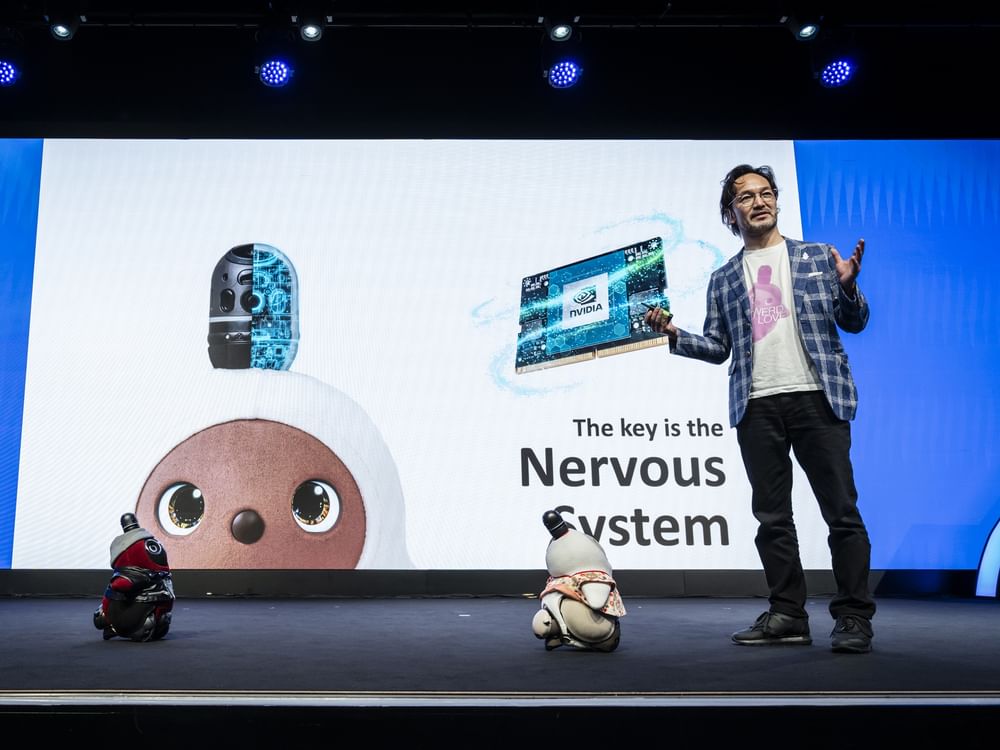
DUBAI, 20th November, 2026 (WAM) -- Kaname Hayashi, creator of LOVOT and Founder and CEO of GROOVE X revealed that 90 percent of LOVOT users remain still actively using their robots after three years, highlighting the potential for emotionally engaging technology to sustain long-term relationships with users.
Robots of the future may do more than perform tasks and improve productivity. They could also strengthen people's capacity for affection, care and emotional connection, according to Hayashi, speaking at Dubai Future Week 2026, organised by Dubai Future Foundation under the theme “For the Human of the Future” at Emirates Towers and the Museum of the Future.
During a session titled ‘Robots Will Make Us More Human, Actually’, Hayashi introduced LOVOT as a “slow-relation robot”, designed to build lasting emotional connections rather than perform practical tasks. He explained how its ability to recognise individuals, respond to their behaviour and initiate interactions could offer a different model for human-robot relationships.
Hayashi said, “So many people would like to have cute robots. LOVOT can recognise how I walk and respond to my emotions. Thanks to the sensors in its head, it can collect a large amount of data, which is analysed using NVIDIA chips.
“Usually, if you purchase a home-use robot, after three months, it’s probably not important anymore. But for LOVOT, day by day, it’s getting more important for you.”
Owners held or cuddled their LOVOT an average of 5.6 times a day, with each interaction lasting approximately 9.5 minutes, equivalent to nearly an hour of physical contact daily. Weekly active users accounted for 92 percent, while daily active users reached 90 percent.
Hayashi also highlighted how owners' perceptions of LOVOT evolved after adoption. Before adoption, appearance and movement were among the most appealing features, cited by 56.5 percent of respondents. After adoption, that figure declined to 25.6 percent, suggesting that initial visual appeal became less important as owners developed longer-term relationships with their robots.
By contrast, the importance of LOVOT's ability to recognise its owner and approach them independently rose from 27.2 percent to 58.2 percent, while the value placed on eye contact increased from 26.9 percent to 40.2 percent.
Hayashi linked these findings to LOVOT's “nervous system”, which enables it to recognise individuals and respond to their presence. Physical warmth and touch also remained important to owners over time.
A LOVOT robot accompanied Hayashi on stage, demonstrating its autonomous movement and responsiveness, and giving the audience a firsthand glimpse of how its behaviour is designed to encourage human connection.