
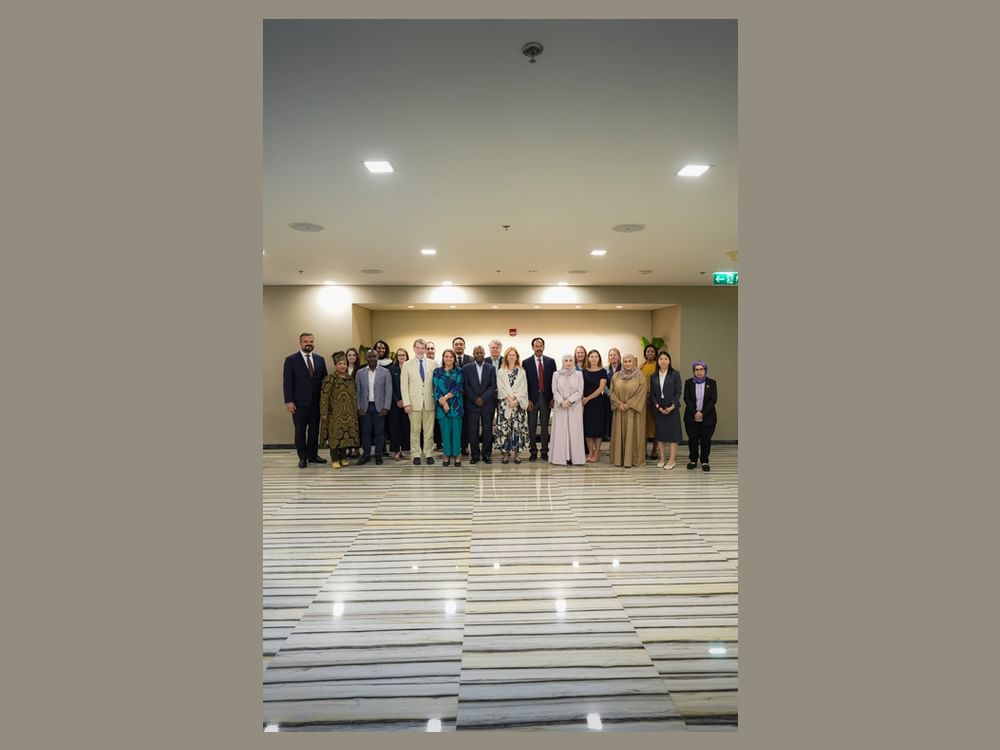
ABU DHABI, 20th November, 2026 (WAM) -- The Global Institute for Disease Elimination (GLIDE), in collaboration with the World Health Organisation (WHO) and Mundo Sano Foundation, successfully concluded a two-day technical consultation in Abu Dhabi focused on multi-disease elimination approaches for malaria and neglected tropical diseases (NTDs).
The hybrid consultation provided a platform for experts in malaria, NTDs, and health systems to exchange experiences, examine implementation challenges, and identify opportunities to strengthen multi-disease elimination (MDE) approaches. The discussions are expected to inform ongoing work on WHO guidance for MDE across malaria and NTDs.
Dr Farida Al Hosani, Chief Executive Officer of GLIDE, said, “Disease elimination requires us to learn across programmes, countries and regions while preserving the disease-specific expertise that has driven progress to date. This consultation provided an opportunity to bring these experiences together, explore where integration can add practical value and strengthen the evidence needed to support countries as they pursue multiple elimination goals.
“For GLIDE, co-hosting and sharing knowledge of this kind is central to advancing sustainable disease elimination. We are pleased to work alongside WHO and Mundo Sano to bring together regional experiences, share practical lessons, and explore how these can inform approaches that support progress across different health-system settings.”
Dr. Maru Aregawi Weldedawit, Unit Head, Vector, Disease Control, Elimination & Eradication (VCE) Across Sectors, Malaria & Neglected Tropical Diseases (MNT) Department, WHO, said, “Multi-disease elimination is not about replacing disease-specific expertise but about finding smarter ways to deliver it. This consultation showed the value of countries and partners sharing real-world experience to build the evidence base for integrated approaches. WHO is committed to translating these lessons into practical guidance that supports countries pursuing multiple elimination goals.”
Dr. Marina Gold, CEO, Mundo Sano Foundation, said, “Getting key stakeholders in the same room, working together to align efforts and strategies is not a simple process, so that, in itself, is a great achievement of this meeting. These two days of brainstorming bring together experiences from rooted field implementations, expert knowledge, and multilateral organisations to integrate and intensify the focus towards multi-disease elimination. It is the first of future necessary conversations.”
Over the two days, participants examined experiences from regional initiatives and countries working to apply more integrated approaches to disease elimination. Discussions explored how MDE can build on established disease-specific capabilities while supporting coordinated action across surveillance, access to commodities, service delivery, and post-elimination monitoring.
Participants also considered the evidence, financing, implementation, and partnership requirements that can enable multi-disease approaches to respond to different country contexts. Perspectives were shared from Africa, the Eastern Mediterranean, South-East Asia, the Western Pacific, and the Americas.
The consultation reflects GLIDE’s ongoing role in convening expertise, supporting knowledge exchange, and contributing to the evidence needed to advance sustainable disease elimination alongside global and regional partners.