
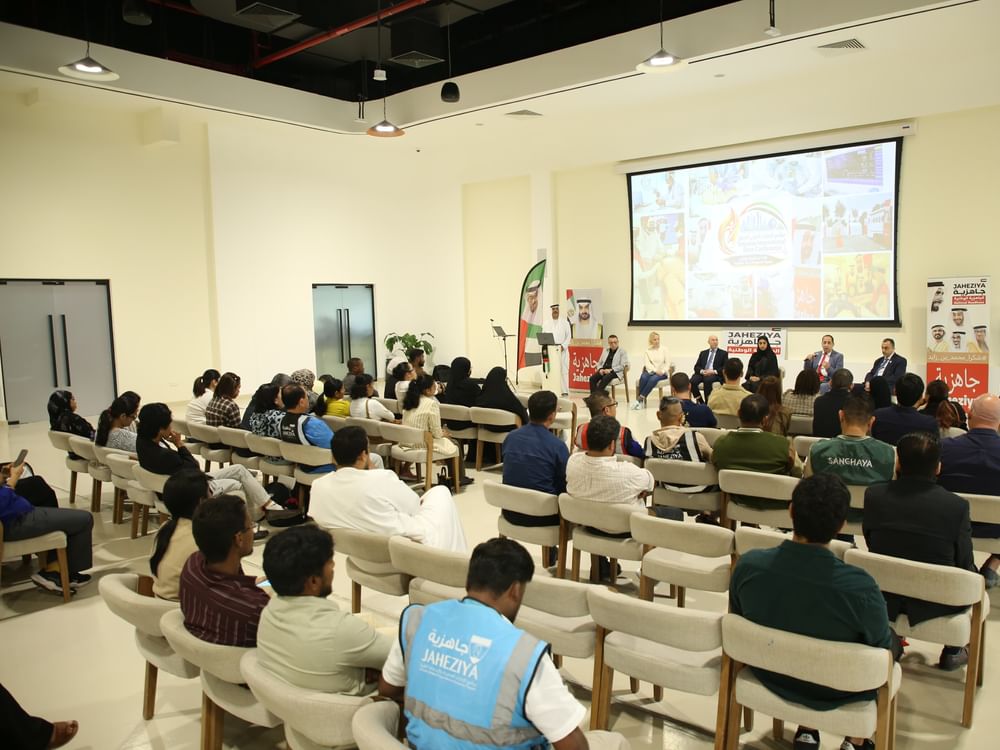
ABU DHABI, 22nd November, 2026 (WAM) -- The Emirates International Burn Conference 2026 discussed ways to strengthen medical readiness and response to burn injuries. The conference opened on 21st November at Nabdh Al Falah Centre in Abu Dhabi and concludes today.
It showcased national initiatives, specialised programmes and training exercises to enhance the preparedness of hospitals and burn centres and develop the capabilities of medical teams and emergency medical services personnel to manage severe burn injuries and mass casualty incidents.
Held under the theme “Together for a Prepared Nation”, the conference showcased the outcomes of the UAE National Burn Medicine Readiness and Response Accelerators System. Its 10 specialised initiatives included the establishment of the first Emirates Burn Council, the launch of the first specialised national programme for readiness and response in burn medicine, and the establishment of a specialised training academy, a national network of internationally accredited training centres, a national mobile burn training centre and the UAE National Burn Emergency Medical Team.
The initiatives also included the preparation and qualification of specialised burn medicine instructors, promoting community awareness and burn prevention, launching the first specialised national burn conference, and introducing a national award and medal for excellence in burn medicine readiness and response. They also support scientific research and innovation and the use of medical simulation and artificial intelligence in training and professional qualification.
Seven specialised lectures covered the stages of burn care, from prehospital medical management to care in emergency departments and intensive care units. The lectures addressed burn shock, fluid resuscitation, airway injuries and smoke inhalation, alongside major medical incident management, the implementation of command and control systems and stronger coordination among responding agencies.
The conference conducted two extensive tabletop simulation exercises, comprising a total of 165 minutes. The first focused on preparedness and response to incidents arising from chemical, biological, radiological, nuclear and explosive hazards. It covered risk assessment, incident scene safety, protection of frontline responders, casualty triage and decontamination when required.
The second simulated a mass burn casualty incident and tested the activation of hospital emergency plans, expansion of hospital surge capacity and mobilisation of human and medical resources. It also covered casualty resuscitation and triage, distribution of patients among hospitals and specialised burn centres, and medical transportation and evacuation.
The programme also included the European Burn Course, which combined scientific lectures, practical workshops, hands-on exercises, clinical case discussions and medical simulation. It focused on the initial assessment of burn patients, fluid resuscitation, airway management and critical care to develop the clinical and practical skills of medical, nursing and emergency medical services personnel.
Dr. Adel Al Shamry Al Ajami, Chief Executive Officer of the Zayed Giving Initiative, President of the Emirates Doctors Initiative and Chief Executive Officer of JAHEZIYA, said the conference formed part of efforts to develop the institutional and human capacities of hospitals and burn centres through specialised training, the transfer and localisation of international expertise, and stronger partnerships among healthcare, academic and training institutions.
He explained that managing major burn incidents and mass burn casualties requires qualified personnel, standardised medical protocols and an effective command and control system. It also requires stronger hospital surge capacity and operational capabilities, as well as coordination of casualty triage, medical transportation and evacuation.
Professor Roberto Mugavero, President of the European Centre for Disaster Medicine, emphasised the importance of cooperation with JAHEZIYA in developing specialised training programmes, exchanging expertise and standardising training curricula. He highlighted the role of joint exercises and medical simulation in testing the operational readiness of healthcare institutions and strengthening the capabilities of medical teams and responding agencies.
The conference was organised by the Emirates Burn Council and the JAHEZIYA National Training Academy in cooperation with Medic Conferences, at the initiative of the UAE National Medical Readiness and Response Programme (JAHEZIYA), the European Centre for Disaster Medicine, the Middle East and North Africa Centre for Disaster Medicine and the National Centre for Disaster Medicine. It brought together experts, consultants and specialists in burn medicine and surgery, emergency medicine, intensive care and disaster medicine.