
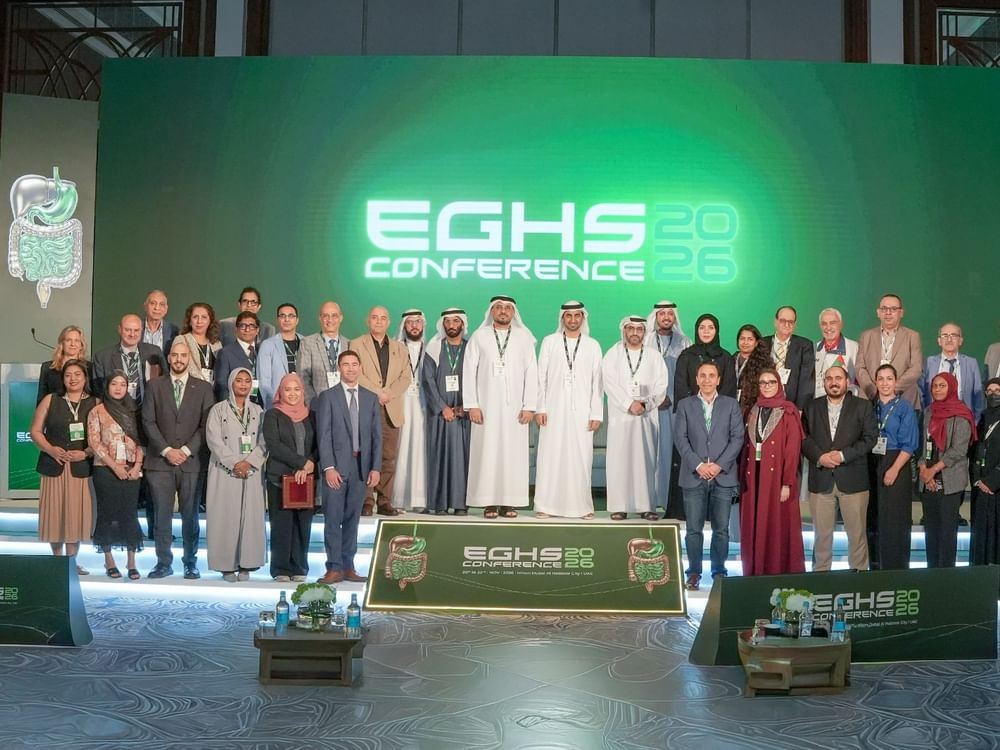
DUBAI, 23rd November, 2026 (WAM) -- The Emirates Gastroenterology and Hepatology Society (EGHS) Conference 2026, which concluded in Dubai on Sunday, recommended strengthening early diagnosis of gastrointestinal and liver diseases, developing integrated treatment pathways for patients with inflammatory bowel disease and expanding the use of advanced endoscopic techniques.
The recommendations included increasing the application of endoscopic ultrasound, endoscopic resection, bleeding control and advanced therapeutic interventions in gastroenterology and hepatology.
The three-day conference brought together more than 800 physicians, specialists and healthcare professionals from the UAE and abroad to discuss the latest developments in diagnosing and treating gastrointestinal and liver diseases.
Participants emphasised the importance of strengthening early diagnosis, developing treatment approaches and enhancing the capabilities of healthcare professionals.
The recommendations also highlighted the need for continued training in modern therapeutic techniques through practical workshops, promoting evidence-based clinical practices supported by the latest scientific research, and strengthening cooperation among gastroenterologists, hepatologists, surgeons, radiologists and related specialists.
Such multidisciplinary collaboration contributes to improving diagnostic accuracy and identifying the most appropriate treatment approaches for individual patients.
The conference also called for greater attention to paediatric gastrointestinal diseases, gastrointestinal motility and functional disorders, and improved approaches to managing complex cases.
Participants stressed the importance of expanding the exchange of expertise among medical institutions in the UAE, the region and internationally to develop healthcare professionals' capabilities and improve the quality of care and patient outcomes.
Dr. Abdulla Al Hassani, President of EGHS, said the conference's success reflects the UAE's position as a leading destination for specialised medical conferences and its ability to attract scientific and clinical expertise from around the world.
He noted that the event provided an important platform for exchanging knowledge and discussing challenges facing medical specialities.
Al Hassani added that the strong participation, diverse scientific programme and practical workshops contributed to achieving the conference's objectives, enabling participants to explore the latest developments in the diagnosis and treatment of gastrointestinal and liver diseases.
He emphasised that the importance of such gatherings extends beyond scientific discussions, helping translate medical advances into improved clinical practices and higher standards of patient care.