
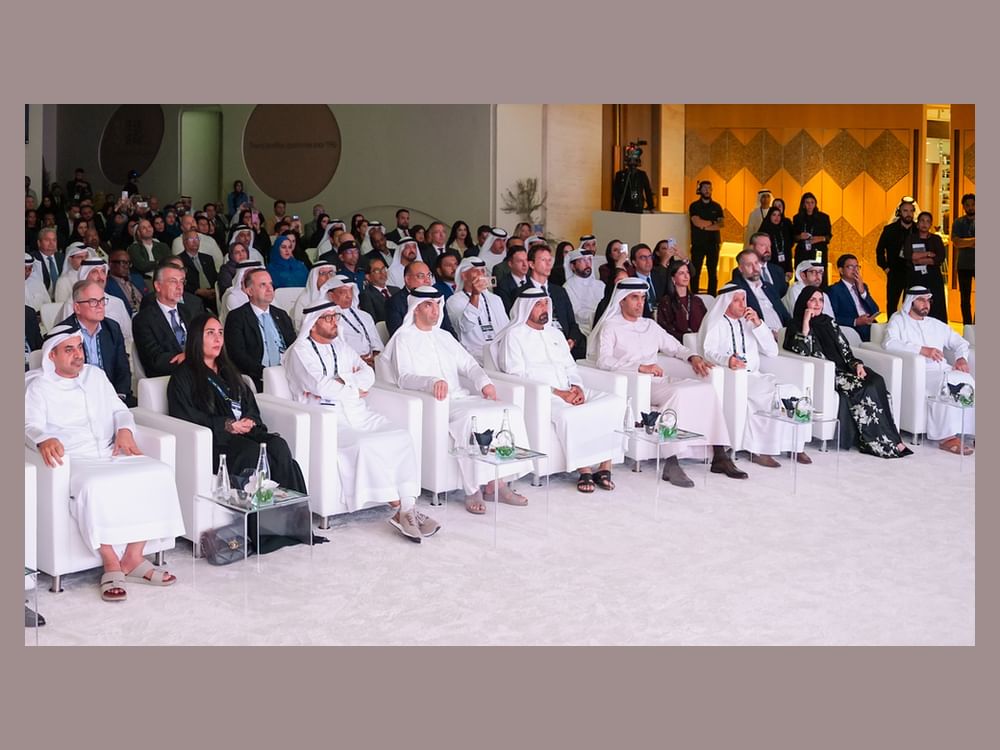
DUBAI, 23rd November, 2026 (WAM) -- H.H. Sheikh Ahmed bin Saeed Al Maktoum, Chairman of Dubai Integrated Economic Zones Authority (DIEZ), inaugurated the Future Growth Nexus Summit, organised by Dubai Airport Freezone (DAFZ) in partnership with Forbes Middle East to mark the freezone's 30th anniversary.
Held under his patronage, the summit brought together more than 300 participants, including 27 speakers, alongside senior government officials, diplomatic representatives, global business leaders, investors and industry experts.
Sheikh Ahmed said Dubai Airport Freezone has embodied, over three decades, the vision of His Highness Sheikh Mohammed bin Rashid Al Maktoum, Vice President, Prime Minister and Ruler of Dubai, to establish the emirate as a global hub for trade and investment.
He noted that DAFZ has become a regional base for leading international companies and a key contributor to the growth of Dubai's non-oil trade.
Sheikh Ahmed added that DIEZ continues to invest in infrastructure and services across its economic zones, enabling companies to manage their operations and international trade from Dubai, in support of the Dubai Economic Agenda D33 and the emirate's position among the world's leading economic cities.
During a keynote address titled "Smart Trade Policies for Integrated Economic Zones", Dr. Thani bin Ahmed Al Zeyoudi, Minister of Foreign Trade, announced that the Ministry is developing an artificial intelligence-powered trade platform to help exporters and importers anticipate disruptions to global trade, respond flexibly and identify new opportunities in international markets.
He explained that the UAE continues to expand and diversify its land, sea and air trade corridors, leveraging its advanced infrastructure, strategic location and network of Comprehensive Economic Partnership Agreements with more than 40 countries to improve market access and reduce trade barriers.
Al Zeyoudi highlighted the role of economic and free zones in strengthening trade, investment and exports, noting that trade through DIEZ reached approximately AED491 billion (US$133.7 billion) in 2025, an increase of 46 percent compared with 2024 and four times its value in 2020.
He added that UAE non-oil exports rose 21.6 percent to approximately AED706 billion ($192 billion) during the first nine months of 2026.
Their share of total non-oil foreign trade increased to a record 24 percent, compared with 21.7 percent during the corresponding period of 2025, reflecting the growing competitiveness of UAE products in international markets.
Dr. Mohammed Al Zarooni, Executive Chairman of DIEZ, highlighted DAFZ's contribution to Dubai's position as a global centre for trade, logistics and investment during a keynote address titled "Three Decades of Transformation: Trade Hubs Accelerating Dubai's Growth".
He said DAFZ's trade exceeded AED479 billion in 2025, accounting for 15.4 percent of Dubai's non-oil trade.
Al Zarooni noted that these results reflect three decades of investment and the freezone's ability to adapt to changing global markets.
He emphasised that economic zones must continue evolving amid transformations in global supply chains, technology-driven business models and the growing influence of sustainability on investment decisions.
Through Dubai Airport Freezone, Dubai Silicon Oasis and Dubai CommerCity, DIEZ combines capabilities in international trade, technology and digital commerce, providing an integrated environment for companies to establish operations, innovate and expand.
Al Zarooni affirmed the Authority's commitment to building on DAFZ's achievements and strengthening DIEZ's role as an integrated platform for trade, investment and innovation, attracting new investment, developing economic sectors and creating sustainable opportunities in support of D33.
For her part, Amna Rashid Lootah, Director-General of DAFZ, outlined the freezone's future priorities during a keynote address titled "Building the Next Chapter of Global Trade: DAFZ's Vision Beyond 30 Years".
She said DAFZ's business community comprises more than 3,300 companies, including over 600 multinational corporations with regional headquarters at the freezone.
Lootah emphasised that the trust established through strong business relationships, responsive services and consistent delivery remains a foundation of DAFZ's development.
She added that its future vision focuses on strengthening partnerships, responding to evolving business needs and creating long-term value while enabling companies to grow, innovate and compete globally.
Khuloud Al Omian, CEO and Editor-in-Chief of Forbes Middle East, reviewed DAFZ's achievements since its establishment in 1996 and its contribution to supporting international companies and their expansion into new markets.
She said the summit provides a platform for government officials, business leaders and investors to discuss the future of global trade, anticipate economic transformations and explore growth and partnership opportunities from Dubai.
Al Omian also announced a special edition of Forbes Middle East magazine marking DAFZ's 30th anniversary, highlighting individuals, companies and entrepreneurs who have contributed to Dubai's economic development.
The summit featured prominent speakers, including Aziz Koleilat, President and CEO of GE Aerospace for the Middle East, Türkiye and the Commonwealth of Independent States; Lisa Park, Area Managing Director for the UAE at A.P. Moller–Maersk; Nabil Sultan Al Murr, Group CEO of dnata; and Amadou Diallo, Group CEO of Aramex.
Other participants included Gabriel Semelas, President of Airbus for Africa and the Middle East; Matthew Stephenson, CEO of the World Free Zones Organization; Bremer Pauw of DHL Supply Chain; and Nitin Tatiwala, Vice President of Marketing and Customer Experience for the Middle East, Indian Subcontinent and Africa at FedEx.
The summit's programme focused on four main themes: future-ready logistics, sustainability as a strategy for net-zero trade, the digital trade revolution, and investment and innovation driving the future of trade and logistics.
Discussions explored developing more resilient and sustainable supply chains, the future of aviation in the Middle East and reducing emissions across warehousing, transportation and last-mile delivery.
Participants also examined the role of digital marketplaces and business-to-business e-commerce platforms in facilitating cross-border trade, alongside applications of AI, robotics and predictive analytics in improving transport routes and logistics efficiency.
The sessions highlighted the importance of investment and partnerships in developing innovative solutions, while addressing the impact of insurance costs, risks and price volatility on trade and investment decisions.
They also explored ways to support small and medium-sized enterprises and startups within integrated economic zones through specialised infrastructure, improved access to finance, business support programmes and strategic partnerships.
The summit featured a special presentation celebrating DAFZ's 30-year journey, highlighting its achievements in supporting international trade and connecting businesses with global markets.
It also showcased DAFZ's efforts within the DIEZ ecosystem to develop an integrated business environment that attracts international investment and supports companies' expansion into regional and global markets, in line with the Dubai Economic Agenda D33, which aims to double Dubai's economy by 2033 and position the emirate among the world's top three economic cities.